In my new book and my weekly memos, I talk a lot about having a deep, visceral feel for your audience. You have to know what moves them, what drives them crazy, what breaks their heart, what brings a tear to their eye.
You can’t have a persuasive conversation if you don’t know who you are talking to. That’s a foundational truth, but it’s not the end of the story. Today, let’s examine the other side of the equation: who’s doing the talking?
I learned this lesson the hard way early in my career as a campaign consultant. I worked for John Marttila, a brilliant adviser to progressive Democrats. He carried himself with quiet authority and delivered advice in a deep, unforgettable voice.
At client meetings, I’d make recommendations, and people around the table would have a “ho-hum” response. Marttila would restate my idea, often with less precision and nuance, and people would react like Moses had just delivered the Ten Commandments. (Can you tell it still irks me decades later?)
There’s a lot going on in that dynamic – age, experience, etc. But the fact remains. One person or group can say something and have it barely register, while another can say essentially the same thing and it really breaks through.
This memo is about making sure you end up on the right side of that line.
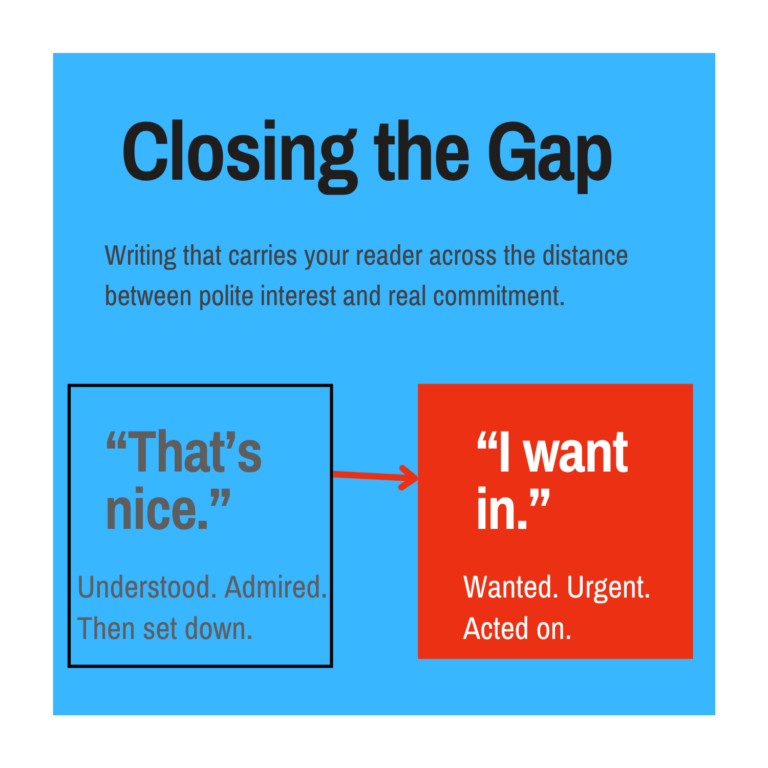
The bottom line: Persuasive messaging is a two-way street. Yes, you have to really know your audience and have something compelling to share with them. But it could all be for naught unless it’s said with a compelling personality and in an engaging voice.
Personality and voice don’t replace content. They help deliver it.
A reality check before I leave you with the wrong impression. A compelling personality and a clear voice are essential. But they only matter if they are vehicles for driving home persuasive, substantive ideas. Try to use them as cover for not really having anything to say and you’ll be found out pretty quickly.
For a case study in the power of combining personality, voice and substance, we need look no further than Zohran Mamdani. In last year’s mayoral race, he captured the imagination of NYC voters and the larger political community with a series of clever digital initiatives. But they weren’t just clever. They were purposeful.
Jumping into the freezing Hudson River would have been a stunt. Jumping in to draw attention to his call for a rent freeze made it a substantive message conveyed in memorable fashion.
And six months into his term as Mayor, two things are true. He continues to draw attention to his work with a clear, compelling personality. But he and his advisers have adeptly switched from digital strategies that thrive in a campaign setting (persuading and mobilizing people for a singular, time-sensitive goal) and those that serve the task of running a major American city (delivering services, solving people’s problems over a four-year term).
Mamdani didn’t win, and isn’t governing, on charm. His strong personality and clear voice have staying power because he treats them as a delivery system for advancing a clear substantive agenda centered on making his city fair and affordable for working class New Yorkers — freeze the rent, drive down grocery costs, make childcare more accessible, etc.
What Gets in the Way
In a world where only the strongest personalities and clearest voices break through, what prevents so many groups from compelling presentations in these areas? There are three main barriers:
The “our work speaks for itself” attitude: Nonprofit groups are staffed and led by deeply committed people, steeped in the intricacies of their work. They know what they are doing is important. Sometimes that translates into a feeling that attention to things like personality and voice is unwarranted.
Reluctance to make “that’s not us” choices: What’s true about mission is also true about personality. Each involves a process of subtraction – deciding what you do and what you don’t do. Or in the case of personality, deciding how you carry yourself and how you don’t.
And they’re connected. For example, a science-based “we stick to the evidence” group can’t adopt a rabble-rousing personality and voice. Reluctance to make clear choices that align mission and personality can result in mumbling.
Playing it safe. There’s a third reason why many candidates, nonprofit CEOs and executive directors lean towards bland and away from daring. It’s a risk management approach. Too often the advice they receive from board members and comms consultants is to play it safe.
But playing it safe in today’s attention economy is choosing to be invisible. And it’s electing to try to get your substantive message across without a clear personality and voice to help deliver it. You can give that a go, but the odds are stacked against you.
Mission, personality and voice all have to align. It’s not about everybody trying to “be like Mamdani.” It’s about finding the personality and voice that authentically match your group and the way you carry yourself in the world.
Let’s look at some keys to using personality and voice in ways that attract attention, build trust, and drive impact.
Remember it’s important to both know who your audience is and to reveal who you are.
The best, most persuasive conversations have two things going for them. They start with a deep, emotional feel for who you’re talking to and they advance when the person or group doing the talking reveals a compelling personality and speak with an engaging voice.
The price of playing it safe by striving not to offend runs higher in the attention economy.
There’s a risk to conveying a strong personality. Some people will be drawn to it and others won’t. So, it’s important to make sure there’s a match between the way you present yourself and the people you’re most interested in reaching. But that’s different than focusing on not offending anyone. Giving no one a reason to object often equals giving no one a reason to care.
Use the adjective test to define and clarify your personality.
How can you tell if a group has a clear personality? Here’s a simple, but pretty reliable, test.
Well-defined groups can usually be described with a couple of adjectives. The ACLU (tough and uncompromising). Doctors Without Borders (skilled and daring). St. Jude’s Research Hospital (compassionate and ground-breaking). PETA (bold and activist). The Nature Conservancy (professional and impactful). Greenpeace (feisty and risk-taking). If it’s not clear what adjectives capture your group’s personality, it’s time to solve that lack of clarity. You can’t communicate a personality you haven’t settled on.
Remember the golden rule: If you don’t live it, you can’t claim it.
Defining your group’s personality isn’t just a question of choosing one out of thin air because you think it will appeal to people. You have to be able to walk the walk. If I think I’m the life of the party and my friends see me as a boring wallflower, something’s got to give.
The same is true if you describe your group as a feisty challenger of the status quo and your audience sees you as a low-key, “working within the system” player.
If a candidate claims to be a rabble-rousing outsider, it won’t hold up if the politician never strayed from the middle of the road throughout their career.
Be alert to lack of alignment between the personality you seek to convey and the one that your core audiences perceive. The strongest organizational personalities are those affirmed by what people see with their own eyes. If your key audiences have only a fuzzy sense of your group’s personality or, worse still, if they see it markedly different than you do, you must solve that misalignment. Because left unattended, it’s a disconnect that will come back to haunt you.
Always reflect your personality in how you communicate.
Here’s one way to think about personality and voice. Personality is about who you are and how you carry yourself in the world. Voice is about what you say and how you give expression to your personality.
Your audience will only gain a clear sense of your personality if you consistently reflect it in the stories you choose to tell, the language you elect to use, and the images you decide to convey.
Here is what separates the strongest communicators like Zohran Mamdani from the rest. It’s not simply that they know their audience the best. It’s that they know themselves the best and know how to connect the two. That’s what we all have to strive for.
Join the conversation about forging more persuasive messaging for great causes in a challenging landscape.
By submitting this form, you are consenting to receive marketing emails from: Frank OBrien, 1020 East Capitol Street NE, Washington, DC, 20003. You can revoke your consent to receive emails at any time by using the SafeUnsubscribe® link, found at the bottom of every email. Emails are serviced by Constant Contact