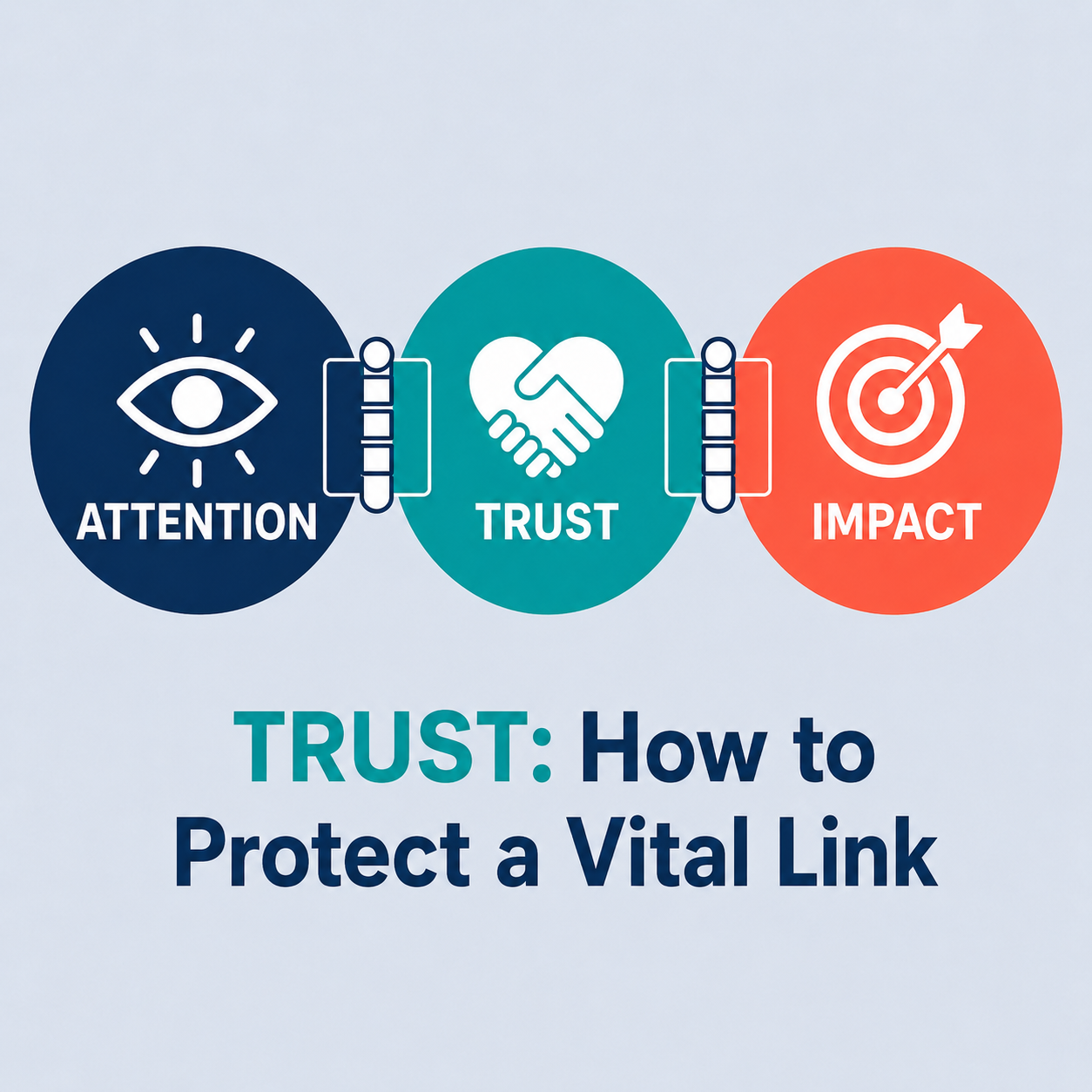
“How Smart Nonprofits Attract Attention, Build Trust, and Drive Impact.”
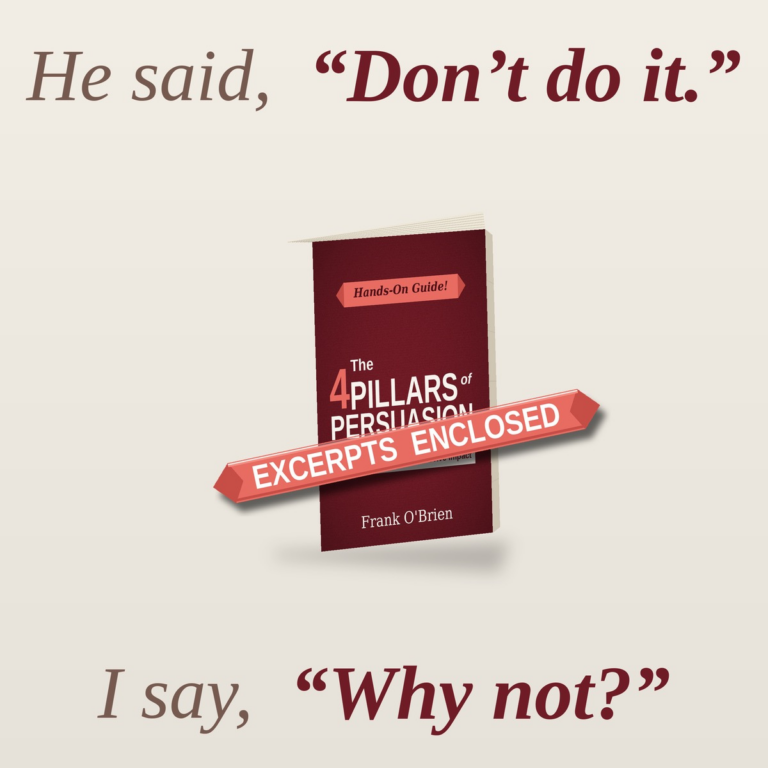
That’s the subtitle of the book I published this summer. Trust plays the same role in that phrase as it does in your nonprofit’s mission: it’s the essential hinge between attracting attention and driving impact. Without it, getting noticed in today’s fragmented media ecosystem won’t amount to much — trust is what turns attention into the consequential relationships that open the door to real impact.
The Nonprofit Sector’s Trust Advantage – and its Limitations
Let’s begin with the good news: nonprofits have a trust advantage over other institutions in American life. Independent Sector’s 2026 Trust in Nonprofits and Philanthropy report, published just last month, reaffirms this long-standing trend.
The report measures “high trust” as the top three points on a nine-point scale. By that metric, 56% of those surveyed have high trust in nonprofits — higher than the courts (28%), local government (23%), state government (22%), the news media (19%), large businesses/corporations (19%), and the federal government (17%).
But here’s the caveat: borrowed trust from the sector isn’t earned trust in an individual organization — and neither protects against broken promises, mission-inconsistent behavior, or manufactured attacks. That risk shows up even in the Independent Sector data: scores are highest for human services groups (67%) and lowest for civic organizations (41%).
In an era where even trust is polarized, advocacy groups face a tougher challenge than direct services charities. But every organization needs an intentional approach to gaining and maintaining trust — one that answers two key questions: trust by whom, and trust to do what?
The smartest nonprofits treat monitoring trust not as an occasional task, but as a lens applied to everything they do.
The Main Drivers: How Trust is Earned
Five drivers of trust stand out.
Achievement: People want to see something they care about achieved. Groups that show an ability to get things done earn trust; those without an accomplishment track record have a harder time.
Shared Values: We tend to trust individuals and groups who demonstrate commitment to the same values we hold — the more alignment on beliefs and worldview, the higher the trust potential.
Reliability: People trust groups that can be counted on to do what they say they’ll do. Mission-inconsistent activity or overpromising quickly weakens trust.
Transparency: Independent Sector found transparency about how funds are used positively affects trust for 74% of respondents, and transparency about funding sources for 73%. Transparency includes disclosure about finances, funders, governance, mistakes, and AI use.
Connection: The report also found that 60% of people who directly engaged with a nonprofit said the experience increased their trust. The more engaged people feel, the deeper the trust.
Six Key Trust Dynamics (With Examples)
#1: Financial scandal or gross mismanagement open a fast path to lost trust.
In the 1990s, United Way of America was hit by scandal when leader William Aramony was convicted of defrauding the organization of more than $1 million, and donations dropped as confidence eroded. In 2016, trust in the Wounded Warrior Project eroded after CBS News and The New York Times revealed millions of donor dollars spent on lavish staff retreats, expensive travel, and disputed expenses. And more recently, financial mismanagement and self-dealing have left the National Rifle Association a shadow of its once-powerful self.
The lesson: nonprofits need a culture of accountability and robust financial controls.
#2: Threats may be self-inflicted or manufactured.
The above threats share one thing: they were self-inflicted — the profile of most trust crises. But here’s a telling feature of the current climate: reputational threats are increasingly manufactured by hostile outsiders. You can run a clean organization and still lose public trust to a coordinated disinformation campaign.
Planned Parenthood’s repeated battles against well-funded disinformation are the clearest example. In 2015, provocateur David Daleiden created a front group and fake biomedical procurement company. He and his operatives used deceptively edited undercover videos to falsely advance a stunning accusation: that Planned Parenthood was illegally profiting from the sale of fetal tissue from abortions.
The group responded on three tracks: rapid pushback calling out the videos as deceptively edited smears, an independent forensic analysis exposing omitted footage and misleading splices, and litigation that led a jury to find Daleiden and his front group liable for fraud, trespass, breach of contract, and civil conspiracy — awarding roughly $2.3 million in damages.
Cecile Richards, Planned Parenthood’s leader at the time, called it “the 10th discredited attack over the last 15 years.” One worries about how groups without the savvy, resources, and reputation of Planned Parenthood can cope with such attacks.
#3: Regaining lost trust is a performance problem before it is a messaging problem.
The worst mistake a group can make is treating lost trust as simply a messaging problem. Politics offers an example: many working-class voters came to believe the Democratic Party doesn’t care about their challenges — an opening far-right forces exploited long before Trump, who took it further.
But much of this deficit has been the Democrats’ own doing. The first step in regaining an audience’s trust is a clear-eyed recognition of how you lost it. For decades, too many Democratic politicians catered to the wealthy donor class at working-class expense — and regaining that trust isn’t as simple as talking about “affordability” and wearing Levi’s in TV commercials.
Progressive Democrats have started making inroads by recognizing this and offering concrete ideas, though it will take several election cycles and real policy wins to substantially regain the trust Democrats squandered.
The lesson: no amount of cosmetic messaging overcomes repeatedly violated expectations. Repair requires acknowledgment, changed behavior, demonstrated results, and time.
#4: A reservoir of trust is the starting place for recovery.
If you’re hit with a reputational threat and your trust profile is weak, you’re in trouble. Trust has to be built before you need it.
In 2018, news reports revealed that senior Oxfam Great Britain staff in Haiti had paid earthquake survivors for sex — some possibly minors — and that Oxfam’s 2011 internal inquiry had shielded reputations and abusers. After stumbling initial comments, Oxfam rallied with a stronger, self-incriminating response: publishing the insufficient 2011 report, forming a 9-member Independent Commission on Sexual Misconduct, Accountability and Culture Change, and tripling its safeguarding investment.
Recovery was far from immediate, but Oxfam remains one of the most respected organizations in international development. Prior trust gave it the chance to repair the damage; recovery took disclosure, structural reform, external accountability, and years of follow-through.
#5: Resilience is the capacity to withstand an attack.
A study by communications firm Bully Pulpit International (BPI) surveyed more than 18,000 adults across four countries, testing reactions to 15 reputational attacks on 170 companies. The finding, directly relevant to nonprofits: a trusted brand isn’t necessarily a protected brand.
As BPI CEO Andrew Bleeker puts it, “In the AI era, trust alone is no longer enough . . . companies need to define their leadership, priorities and role in society before others do it for them.” Nonprofits should take note: it isn’t enough to rely on a generalized sense of goodwill. You need resilience strong enough to withstand unexpected threats.
#6: Identity-based trust is powerful but unforgiving.
In commercial marketing, one of the strongest moves is linking a brand to personal identity: Nike as grit and defiance (“Just Do It”), Apple as the creative nonconformist (“Think Different”), Harley Davidson as the rugged American outlaw — a connection so deep people tattoo the logo on their bodies. The same dynamic is open to nonprofits: You’re making a powerful connection when you can make engagement with your group a personal statement about who you are, what you believe, and how you carry yourself.
But once you establish that connection, you’d better live it. In a recent Fast Company article, Emily Cody offers a case study in what happens when you don’t.
As she notes, “SoulCycle was always about selling a version of yourself back to you” — a “self-transformation pitch with a bike attached to it.” Then something jarring happened: SoulCycle’s owner hosted a fundraiser for Donald Trump with tickets running up to $250,000, and, as Cody notes, “riders who’d built an identity around the brand’s message of inclusion didn’t just complain; they left.”
Earnest Research found national SoulCycle bookings dropped roughly 10% in the days after, with weekend attendance in New York and San Francisco down about 15%. It wasn’t an isolated trust violation. A 2020 exposé of top instructors’ using homophobic and racist language without consequence followed. Other factors, including Peloton’s rise and the pandemic, later hurt SoulCycle too, but the initial loss of trust was self-inflicted.
Here’s the question every nonprofit should ask: What identity does supporting us allow someone to affirm — and what would feel like a betrayal of it?
TAKEAWAYS: How Nonprofits Can Gain
and Strengthen Trust
One final note: How they handle AI is shaping up as a major test of trust for nonprofits. More about that in next week’s memo.