In last week’s post (Rewriting: “where the game is won or lost”), we talked about thinking of your first draft as a starting place, not the end point. And we examined the critical role rewriting plays in elevating a message’s persuasiveness.
Today we turn our attention to the second part of the process: the editing, review, and approval steps that take place after the original creator submits the rewritten draft.
There are four roles that come into play after the rewritten draft leaves the creator’s hands. We have the editor, proofreader, fact checker, and program reviewer. Even though one person often plays more than one of these roles, it’s important to think of them as distinct from one another.
There are two imperatives for proofreaders and fact checkers. The first is that they should come at the end of the editing process, not at the beginning. Doing otherwise tends to distract from big-picture issues.
The second imperative is that when performing those functions, it’s important to stay in your lane. No matter their capabilities, if everyone sees themselves as an editor, it creates the confusion referenced below.
For today’s purpose, I will focus on the editor and program reviewer roles.
Notice that I’m using the singular, not the plural. Editing by committee tends to create confusion, not clarity. Letting everybody comment, but nobody lead doesn’t work. It’s important to give one person clear authority for guiding the submitted draft to final approval.
Multiple editing passes: Smart editors approach their task in layers. Here’s one version of that process.
Edit for structure. First and foremost, it is important to make sure the piece holds together and has a compelling flow. Make sure the opening doesn’t include warm-up language before the writer hits stride. Search for tangents and mumbling sections that break the piece’s rhythm, etc.
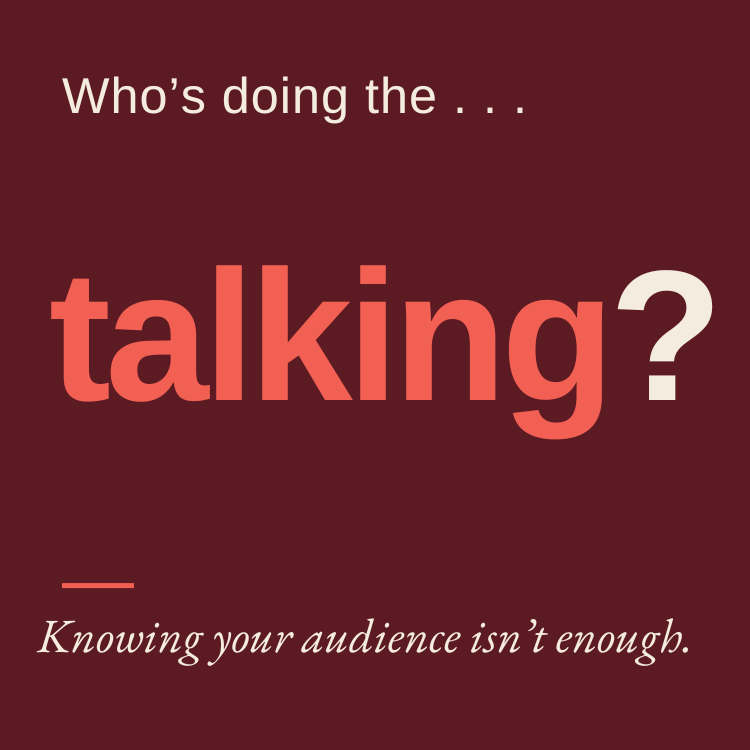
Edit for audience. Next, review the piece with audience in mind. Make sure it feels like a conversation with them and not simply a report on your work. Check for things like lapses into policy speak, details the audience doesn’t need to know about, and content that overlooks or minimizes the audience’s role.
Edit for language. Now, with the prior pieces in place, you can turn to language, tone and line edits. And importantly, make sure the choice of language reflects your organization’s voice.
The Editor-Writer Relationship: The editor-writer relationship can be a fraught one, but it doesn’t have to be. In my early days as a fundraising copywriter for political campaigns, I contributed to those fraught feelings.
I was so upset with people “ruining” what I wrote that I used to define “to vet” as “to seek to drive every ounce of energy and emotional power out of a piece of communication.”
As I gained experience – and hopefully a little more maturity – I came to realize the copy drafting and editing process doesn’t need to be that tense. Not if both sides of the equation follow a few simple principles.
Don’t treat every edit like an insult. You can’t start from the perspective that any change to your draft is unwarranted. Things can only go downhill from there. Be open to the value of input from a fresh set of eyes.
Present your draft thoughtfully.Don’t just go with “Here’s the draft. See what you think.” Send a brief cover note explaining one or two keys to your approach. It will demonstrate the thought and care you put into your writing and may help guide the editor’s attention in a helpful direction.
Know what to care about. There are edits that disrupt the emotional power of what you wrote and edits that just annoy your ego as a writer. Engage on the former. Let go of the latter. You have to know what to push back on and what not to sweat.
Understand audience and objective.You can’t edit effectively if you don’t know the purpose of what you’re editing and the audience for whom it’s intended. Hopefully the creator will provide this context, but if not, seek it out.
Edit, don’t rewrite.Line edits are fine, especially if they’re purposeful. But if you have a major problem with the draft’s structure, tone, or content, don’t take pen in hand. Take the time to explain your concern. Then give the writer the opportunity to address it.
Compliment, don’t just critique.Point out deficiencies and weaknesses. That’s your job. But when you come across especially skilled and persuasive writing, take the time to point that out as well.
Another critical role in the editing/approval process is that of program staff checking a draft’s content for two reasons. The first and most obvious is an accuracy check. But it’s also important for those closest to the program work to make sure we’re advancing the most compelling and persuasive arguments.
This is another area where clarity and thoughtfulness can strengthen the process. So, let’s jump right into some of the keys on both sides of that equation.
Know your material. Nothing can throw off the review and approval process more easily than a writer getting it wrong by failing to understand the content that’s being communicated. Among other things, that undermines the trust of program people reviewing your drafts. It’s a hard and fast rule: You can’t communicate what you don’t understand.
Cultivate relationships. In my life running an agency, I always tried to sit down with those who would be reviewing what I wrote and asking two questions: What do you think is most essential for people to understand about the work you do? And what drives you crazy when you read non-experts’ attempts at describing what you do?
Don’t say “no,” Say, “how about this?” I’ve learned that 90% of program staff edits that a writer might find legitimately troubling can be resolved not by confrontation but by accommodation. “I see what you’re trying to do, but what if we tackled it this way.”
Remember you’re not the audience. The content you are reviewing needs to work for its intended audience more than for you. It’s not about “dumbing down” the copy (a phrase I truly hate). It’s about respecting the difference between someone whose life’s work is devoted to a given topic and someone being asked to engage with one of many causes they support.
Avoid adding in rhythm-breaking content. Elmore Leonard once suggested this rule for writing: “Try to leave out the parts that readers tend to skip.” The easiest way to break the rhythm of an emotionally engaging message is to weigh it down with content of minimal interest to the reader.
Help with the “what’s next?” question. If writers need to know their material, reviewers (especially program staff) have to help by sharing information and insight about where your work is headed. Remember people come forward to help with what’s next more than to celebrate what’s already been achieved.
The journey from first draft to final approved version is where the persuasive power of your messages is either strengthened or dissipated. Hopefully, the guidelines presented here and in last week’s memo can help land you on the right side of that equation.
Join the conversation about forging more persuasive messaging for great causes in a challenging landscape.
By submitting this form, you are consenting to receive marketing emails from: Frank OBrien, 1020 East Capitol Street NE, Washington, DC, 20003. You can revoke your consent to receive emails at any time by using the SafeUnsubscribe® link, found at the bottom of every email. Emails are serviced by Constant Contact