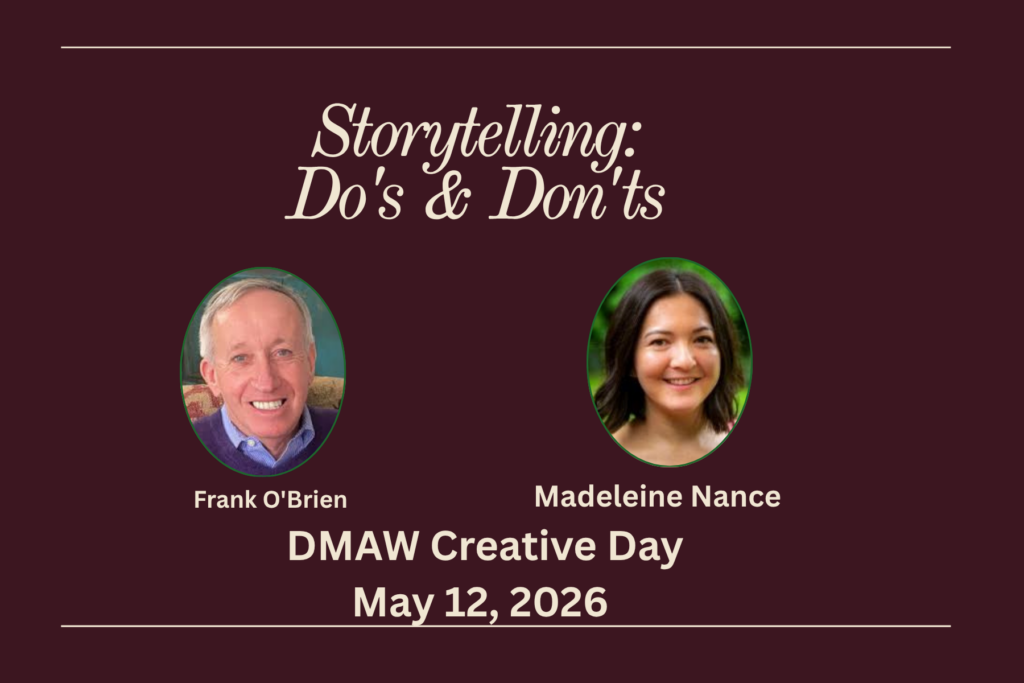
QUICK UPDATE: On May 12th, my friend Madeleine Nance and I will kick off DMAW Creative Day with a Storytelling Do’s and Don’ts presentation.
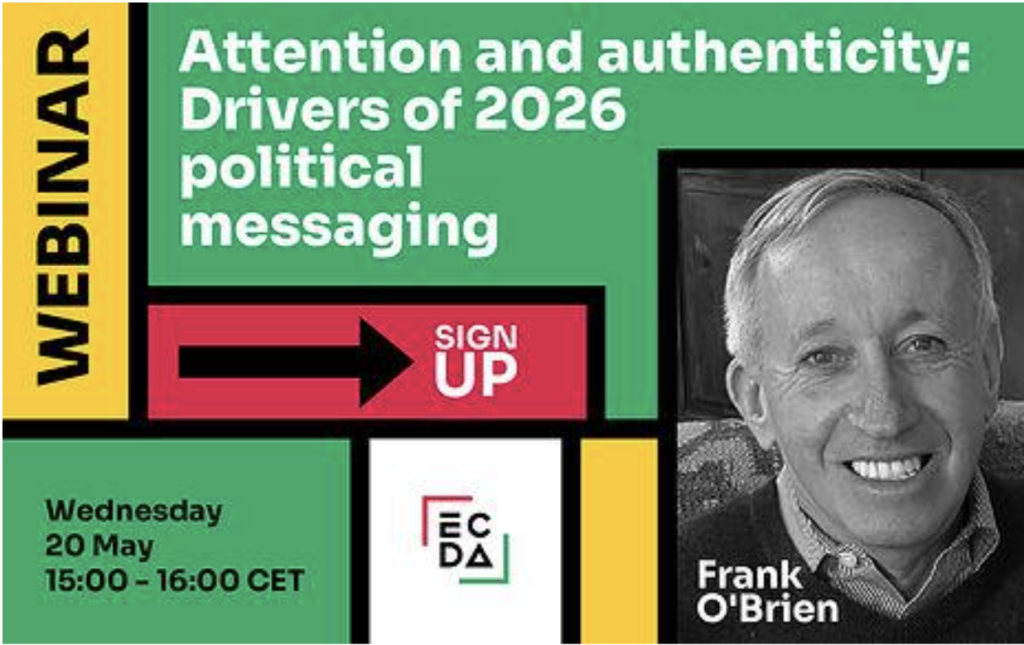
A week later, I’m doing a webinar with my friends at the European Center for Digital Action. It’s titled “Attention and Authenticity: Drivers of the 2026 Political Messaging” More details and registration info for both at the end of today’s post. Now, on to today’s post.
A number of 2025 benchmark reports have been released recently and I know industry analysts and program designers are digging in on all the data and its implications. But I thought I would take a moment to look at a few of the key findings from a creative perspective.

Both the 2025 Q4 Fundraising Effectiveness Project (FEP) Report and the M+R Benchmarks point to the persistent and ongoing challenge of retaining new donors. Here’s how the FEP Report puts it: “The sector retains donors it knows — and has yet to make meaningful progress with donors it’s just met . . . Converting a first gift into a second remains the most consequential unsolved problem in the donor pipeline.”
The Avalon Dispatch recently outlined a series of steps groups can take to address the problem including multi-channel stewardship strategies and early, prompt demonstrations of impact. These post-gift strategies make perfect sense. As I like to say, a first gift is a tentative raising of the hand and our challenge is to reach out and pull the donor into a lasting relationship.
But, especially on the creative front, it’s also important to back up and look at how we are attracting that initial gift in the first place. The big questions: Are we starting a conversation at the point of acquisition that we can sustain and grow over time? And are we too focused on front-end response at the expense of long-term potential? Not easy trade-offs to negotiate. But we’re limiting ourselves strategically if we only look at new donor retention as a post first gift concern.

In several dimensions, the M+R Benchmarks point to “AI-driven shockwaves rippling through” the data. Perhaps most immediately “AI search is fundamentally altering how users experience the web and how audiences learn about issues and causes. One of the most striking findings in our study this year was that the proportion of nonprofit websites’ organic traffic rapidly dropped month-by-month throughout 2025.”
To respond, the report notes that “nonprofits need an Answer Engine Optimization (AEO) strategy to complement their existing Search Engine Optimization (SEO) strategy, integrating with their website content, paid search, PR, organic social and more.”
Take a step back and you realize this is all part of a larger dynamic upending the way nonprofits gain attention, hold it and funnel it into action. We are now living in the attention economy and that requires a fundamental shift in how nonprofits find and connect with their audiences.
Being a distributor of information isn’t enough. Groups now have to be architects of attention. We can’t underestimate how much of a shift in nonprofit communications that portends. Here’s one quick example. I could make a good case that “brand awareness” is too passive a concept in the current climate and might be better thought of as “generating attention.”
Half of Nonprofits are Using AI to Write.
What are the Guiding Principles?
There’s one line in the M+R Benchmarks – just half a sentence really – that caught my eye. “About half of nonprofits used generative AI tools to produce written content.” There’s not a lot of elaboration. Are we talking about filling in the blanks on an acknowledgement letter? Or doing the first draft of an entire appeal or digital campaign?
And, more importantly, are there organizational guidelines in place or where AI-generated content fits and where it doesn’t. On the creative side of things, it’s the challenge we’re all facing. We have to actively embrace the beneficial use of AI and simultaneously guard against the risks.
My take is that the beneficial uses of AI in the creative process are robust including a powerful role in transforming research. But we have to keep our approach human-centered. Don’t use AI to create for you. Use it as a junior editor to help evaluate what you’ve created. And don’t use AI to think for you. Use it as a way to stress test your thinking.
But wherever a group ends up drawing the line, what’s important is for the approach to be intentional and well-thought-out. It can’t be something you stumble into.

Before I close, I just want to note as a writer how much I appreciate the artfulness of the M+R Benchmarks writing. It’s clear and well-said throughout. But I’m really talking about the places where they inject humor and whimsy. A couple of examples:
“In case all those breathless numbers and exclamation points don’t make it clear: this is not normal! “
“We’re going to tell you a number that will hopefully make you smile. Then we are going to tell you a number that will make you chuckle in disbelief. Ready?”
Passages like this aren’t just fun and entertaining in the midst of an awful lot of data. They are purposeful and effective in getting the reader to stop, take special note of what’s being said, and remember it more way more clearly than if the M+R team used more pedestrian language.
Now here’s the information I promised about upcoming presentations. If you’re interested, just click on the images to register.