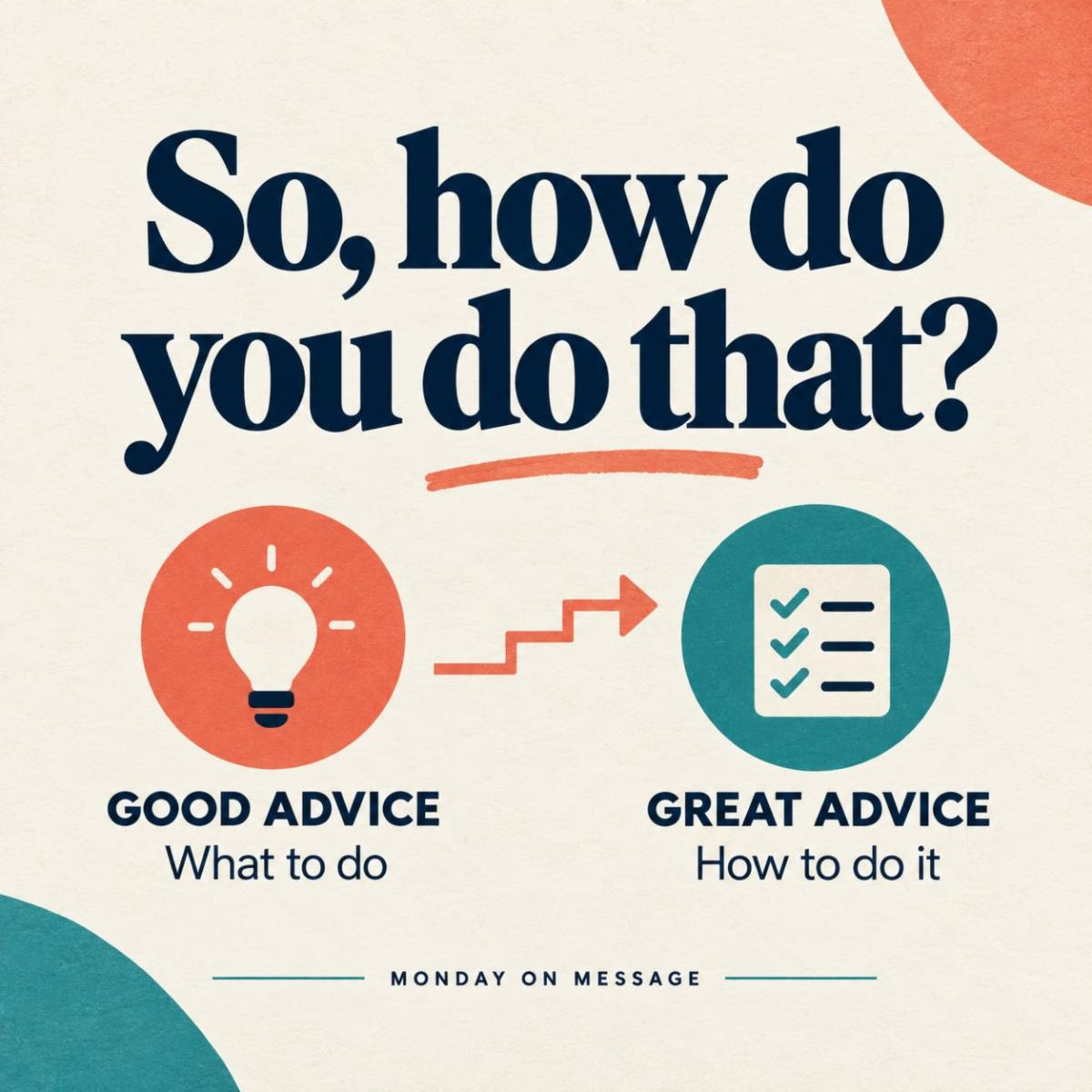
Today’s post is a new installment in my “So, how do you do that?” series. The point: to convey messaging advice that doesn’t stop at what to do, but goes on to show you how to do it.
The goal of my book, The 4 Pillars of Persuasion and every Monday On Message memo is the same. I aim to leave people not with broad “that sounds right” advice, but with actionable steps they can apply to the very next project they work on.
So, let’s take a “So, how do you do that?” look at my favorite piece of advice when it comes to getting a message’s tone and feel right.
Whispering into a Close Friend’s Ear
“Remember the best, most evocative writing has
the feel of whispering something important into
the ear of a close friend.”
— Frank O’Brien
Why am I so fond of this particular guidance? Because it does two things:
All that said, standing alone, the quote is more a bit of pithy wisdom than a piece of actionable advice. Here are seven ways you can bridge that gap.
From Pithy to Practical
#1: Use the whisper metaphor to focus on writing to one person.
Our messages are more personal and powerful when we write them to one person no matter how many thousands will actually receive them. That’s the first and perhaps the strongest benefit of the whisper framework.
You can’t whisper into the ear of a segment, cohort, or message group. And when you start thinking of your audience in those collective terms, it becomes harder to achieve an authentic, engaging tone.
#2: Don’t focus on whispering in a literal sense, but rather on the way it evokes intimacy, deeper conversation, and authentic connection.
It’s not about how your whisper sounds or whether it can be overheard. The purpose of getting in a whispering framework is letting it influence your creative choices. If you think in terms of whispering, it will help make the language you choose more personal. You’ll find yourself voicing your line of argument in a more intimate, authentic way.
You can imagine whispering “What I’m about to share is heartbreaking, but together we can do something about it.” It’s harder to imagine whispering “The implications of the information I’m sharing with you are far-reaching and complex. And that requires your active response.”
#3: Make sure the “close friend” is a match for your actual audience.
The close friend part of the quote also matters. The personal connection it implies raises the stakes. You’re not just communicating with a random individual but with someone you know, care about and wouldn’t want to disappoint.
But be careful, don’t envision someone who fits your personal “close friend” network while bearing little resemblance to your actual audience. You have to be whispering into the ear of someone with the same hopes, dreams, fears and aspirations of those who will receive what you’re writing.
#4: Search your draft for the presence of candor and the absence of jargon.
The close friend in our whisper framework brings important expectations to the table. And seeking to meet those expectations can really strengthen your message. Let’s start with helping expose and drive out the jargon and policy-speak that can break your message’s rhythm and persuasiveness.
You might be able to convince yourself it’s okay to tell a generalized audience that “the structural implications of our opponents’ new policy formulations can’t be minimized or overlooked.” But you know your close friend will hear that and say “what the hell are you talking about?”
But there’s even more to it than that, A close friend expects candor. They count on you to tell them what you know, what you don’t know, exactly what you expect of them, and whether their positive response will be of genuine help. Being alert to those expectations will strengthen your message at every turn.
#5: Don’t forget these two critical words: “something important.”
Content is still king. It’s not just about communicating in an engaging, conversational tone. It’s about having something specific and consequential to say. Miss the “something important” part of the quote and its value quickly disintegrates.
Also remember it’s a two way street. You have to feel you are transmitting really important information and insight. And, at least at the end of the conversation, your close friend has to agree.
#6: Whatever you do, don’t confuse whispering with mumbling.
I always worry a bit about the word “whispering.” I mean it to convey a deeply conversational tone, a sense of intimacy and a vital one-to-one connection. None of those positive features are implied by whispering’s close definitional word “mumbling.”
For as long as I can remember, I’ve been telling clients: is “If you want to be heard, stop mumbling.” Think about why we mumble.
It’s because we aren’t confident of what we’re saying … because we’re aiming to obscure something a genuine response would expose …because we’re really not engaged in the conversation we’re having…and more.
Every one of those mumbling rationales is the exact opposite of our whispering intentions.
#7: Remember no approach to tone and feel matches every occasion.
Let me close with an important caveat. The whisper metaphor doesn’t fit every situation. No single approach does.
In most circumstances, piling on dramatic, overheated rhetoric is less effective than the clear, measured understatement that the whisper framework tends to draw out.
The first approach can feel like instructing your audience on how to feel. The second leads them to formulate their own emotional conclusions. And that’s usually more powerful and persuasive.
But look there’s also a place and time for strong “this is huge and there’s no way around it” language. The devastating outcome of an election or the human impact of a fast-moving natural disaster are two examples of when you’ll want to set aside “whispering into a close friend’s ear” in favor of something more akin to “screaming from a rooftop.”
Try It Yourself (and tell me how it goes)
Some of my best, most engaging Monday on Message memos are those directly based on conversations with individual subscribers. So, here’s my two-part plea:
It would be great to hear from you with that kind of feedback.