It’s great when we learn from others working to communicate on behalf of causes and campaigns. But it’s a mistake if we stop there.
Novelists, screenwriters, songwriters, and commercial messaging specialists are skilled at capturing and holding peoples’ attention. Their success depends on their ability to tell great stories and make powerful emotional connections.
And many of them are quite thoughtful about their craft. Today, let’s look at a few examples.

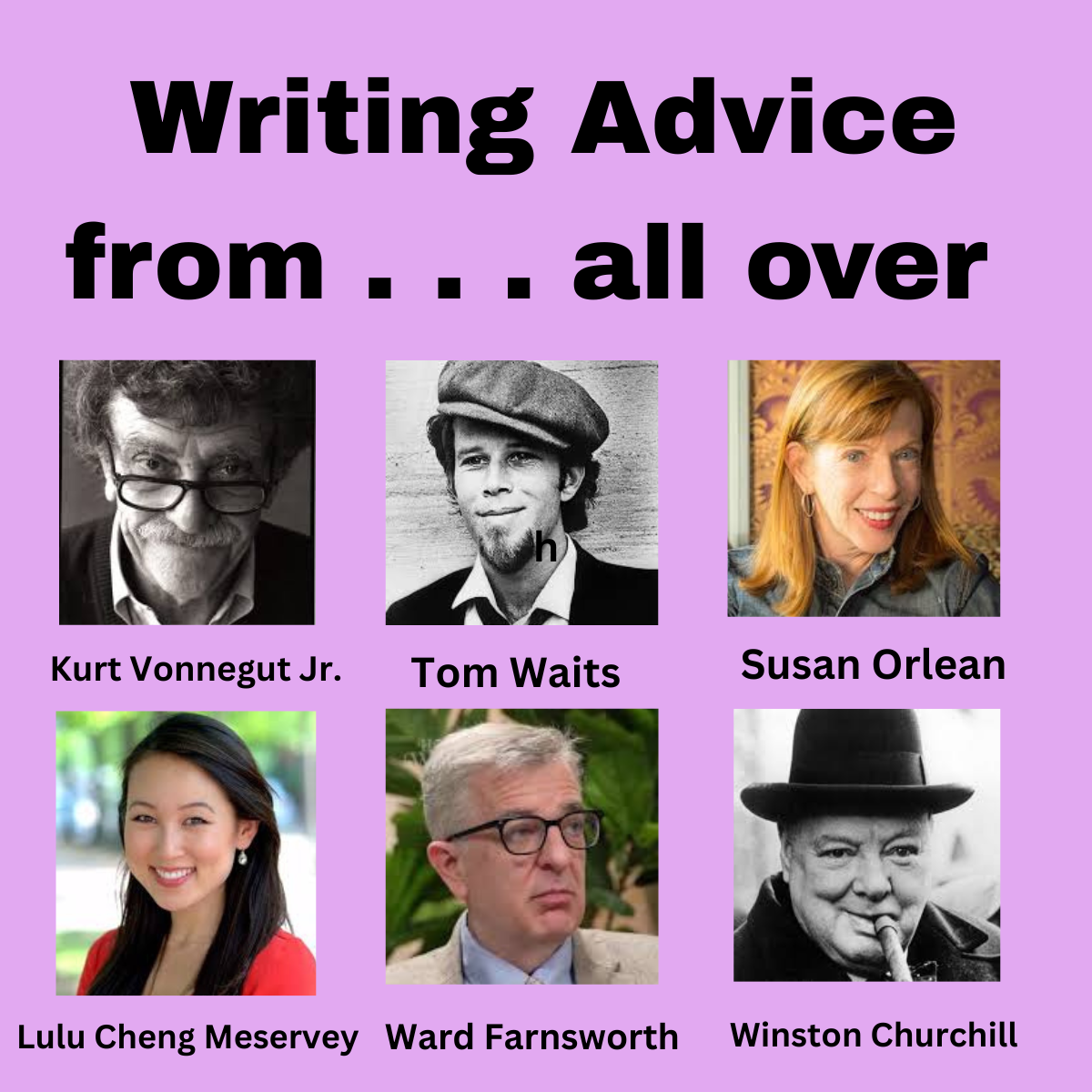
Lulu Cheng Meservey on authenticity over polish
“If the writing is bad, it’s better for it to be bad and honest. . . I’d rather see writing that is suboptimal that has personality and has intent and has conviction than writing that is textbook correct.”
Lulu Cheng Meservey is a highly skilled public relations and communications specialist. The quote above comes from an episode of David Perell’s How I Write podcast (which I highly recommend to anyone interested in the craft of writing).
To clarify her meaning, Meservey offers an analogy. She notes that, in a heartfelt conversation with a friend, you may find that “you’re not articulating yourself well but you’re trying and the emotion is coming through and the intention is coming through.” And, at the end of the day, that’s what really counts.
Meservey isn’t making a case for poorly executed writing. But she is advancing an argument for prioritizing emotion and intention over “textbook correct” writing. First and foremost, the humanity has to come shining through.
The distinction is important not only in how your message is drafted, but also in how it is edited. Edits that make your draft more skillfully crafted, but less engaging emotionally, are a bad trade off.
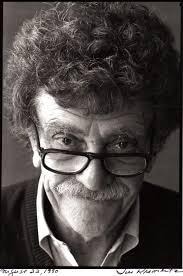
Kurt Vonnegut Jr. on who
you’re writing to.
“Write to please just one person. If you open the window and make love to the world, so to speak, your story will get pneumonia.”
In his own inimitable style, Vonnegut reminded us that writing to an audience, a message segment, or a file cohort is guaranteed to weaken the power of your message. Having as vivid a portrait of a single person you’re trying to reach will sharpen the tone and emotional power of your writing.
Country music artist Brad Paisley makes the same point from another perspective. He tells the story of writing one of his first hits while staring at the photo of the girlfriend he’d just lost. His advice to other songwriters: “Write to somebody. Don’t just write a song like espousing something. To somebody. You’re always singing to someone.”

Susan Orlean on the
gimmick of clever writing
Orlean advises against being “seduced by the gimmick of clever writing, making things clever and snappy and funny. Not that any of those are bad in and of themselves. But I think the more powerful writing is writing where you pull your punches a little, you have a tone that has a little more confidence and is a little less like ‘Hey look at me.”
Susan Orlean, author and The New Yorker staff writer, notes that our writing tends to be more powerful when it adopts a confident, self-assured tone. Showy writing that draws attention to itself can draw attention away from your message. As novelist Elmore Leonard argued, it’s important to “attempt to remain invisible, not distract the reader from the story with obvious writing.”
Write like a storyteller, not like a poet. Nonprofit messages are personal communications, not works of art. Overly polished prose with beautiful turns of phrase and poetic imagery can come across as stilted, robbing your message of authenticity and emotion.
Ward Farnsworth on
Churchill’s Use of Rhetoric
“We shall fight on the beaches, we shall fight on the landing grounds, we shall fight in the fields and in the streets, we shall fight in the hills; we shall never surrender …”
Writing letters and crafting speeches are two separate arts. Devices that work in one can seem awkward and out of place in the other. But that doesn’t mean we can’t learn important lessons from speechwriters. In another How I Write interview, Ward Farnsworth, a brilliant analyst of language use, breaks down the above passage from Churchill’s famous 1940 wartime speech.
The most obvious device in the “we shall fight” speech is repetition to build momentum and express conviction. But Farnsworth points to another equally useful rhetorical technique.
As Farnworth notes, “In English, there’s almost always two words for everything. There’s sort of a big, fancier one and there’s a smaller humbler one.” Examples: create/make, permit/let, acquire/get, correct/right, illumination/light.
The Churchill quote strings together simpler, humbler words, usually single syllable ones. Churchill himself summed it up. “Broadly speaking, short words are best”
Writing is, in part, the process of picking words. Examine your drafts. See if you are leaning too much in the direction of longer, more complex words. But remember this: While in many cases, shorter words are a better choice, it’s the interplay between the two that creates interesting language.
Tom Waits on
Learning to Write
“For a songwriter, you don’t really go to songwriting school; you learn by listening to tunes. And you try to understand them and take them apart and see what they’re made of, and wonder if you can make one, too.”
Many novelists when asked about learning to write offer the same advice: Read a lot. Tom Waits makes the same point about the craft of songwriting. If you want to become a stronger nonprofit communicator, do two things.
First, study examples of strong nonprofit writing. Don’t just read it. Take it apart. How did the writer open the piece to gain the reader’s attention? How did it build momentum from there? What devices did the writer use to draw the reader in emotionally? Did the writer confront barriers standing in the way of persuasion? If so, what approaches were used to overcome them? Etc.
Now, do what I’ve tried to do in today’s post. Extend your learning by using the same “take it apart and see how it works” approach to the work of master communicators well beyond the nonprofit sector.
A FINAL NOTE: I write this free Monday On Message memo for a simple reason: To reach as many nonprofit communicators as possible with actionable advice on more persuasive messaging. If you find this post helpful, I hope you will take a minute to forward it to one or two other people in your network.