If you want to win someone’s attention, make your conversation more about them and less about you.
That may seem like simple and obvious advice. But far too many nonprofit messages ignore that dictum. Their communications basically come across as reports on the group’s work with a modest “here’s how you can help” section added on at the end.
If that describes the messages you’ve been sending, here’s what I recommend in 2026:
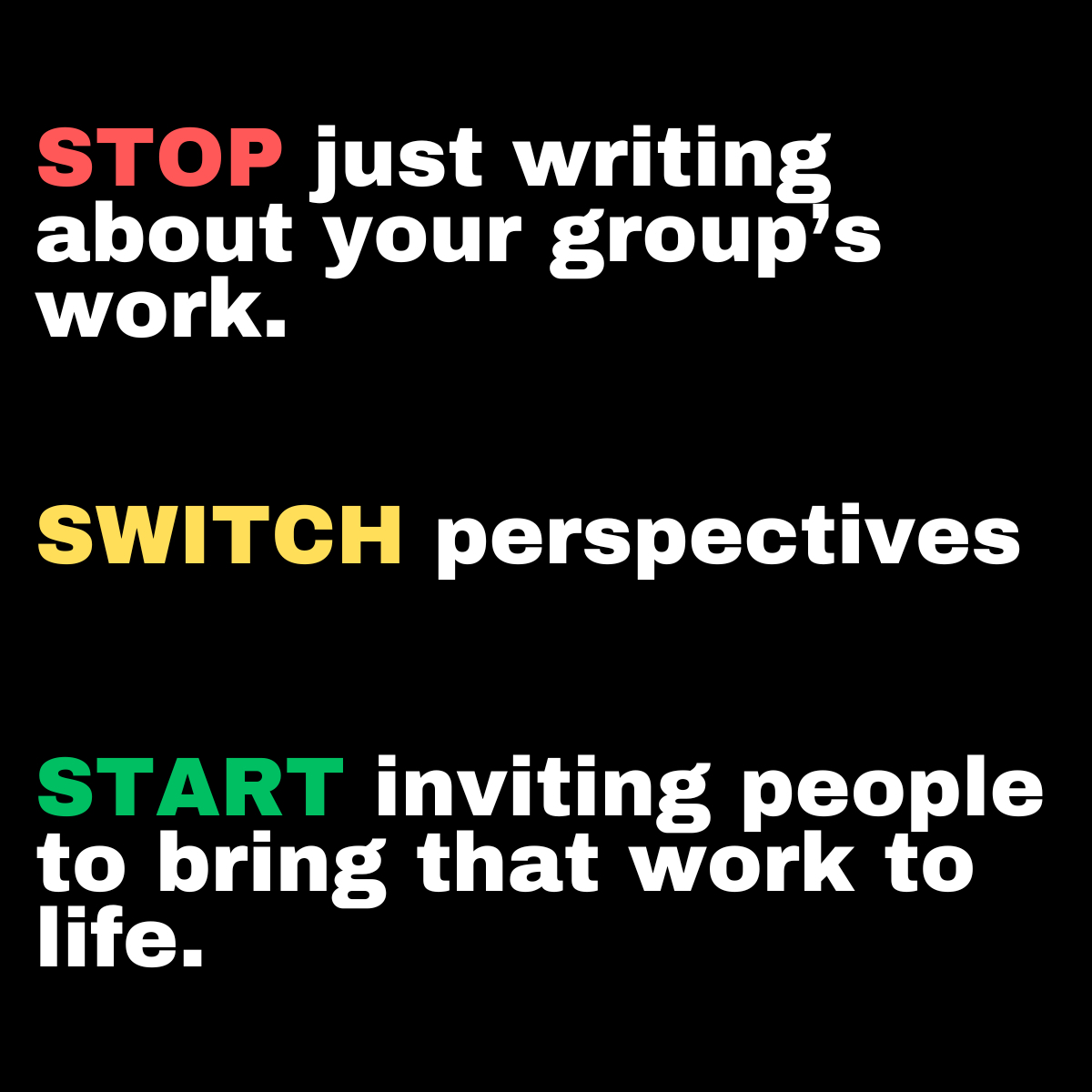
STOP just writing to folks about your group’s work.
START inviting people to bring that work to life.
Your message should be a full-throated argument for why the person receiving it should care and get involved. Better still, it should center on connecting with your reader’s personal identity.
There is a powerful distinction between simply asking someone to take an action on behalf of your group and inviting them to engage with you as an expression of who they are and what they believe in.
In his book Magic Words: What to Say to Get Your Way, Wharton School marketing expert Jonah Berger illustrates the importance of personal identity with a simple example: “Imagine I told you about two people. Rebecca and Fred. Rebecca goes running, and Fred is a runner. Who do you think likes running more.”
See the difference. For Rebecca, running is an activity she engages in. For Fred, being a runner is an identity he embraces.
When you position something in terms of influencing a person’s identity, it has more weight. Taking action is something you do in the moment. Expressing your identity is deeper, it’s about who you are in the long run.
People donate, volunteer, vote and take other actions as a way to express who they are, what commitments they cherish and how intentional and devoted they are to acting on those commitments.
Here’s how storytelling expert Lisa Cron expresses the importance of the personal identity connection:
“Your goal is to create a story that will help your audience see how your idea benefits them in the moment, given who they are and how they see themselves. . . What you’re advocating can’t just be relevant to your audience’s life. It must be relevant to their story.”
Brand matters, but personal identity matters more.
It’s important to have a strong brand. The more you speak in language reflecting your cause’s unique voice, values and organizational stance, the more persuasive you will be.
But as important as brand is, your audience cares way more about their personal identity than your brand identity.
At root, a strong nonprofit message isn’t an update on your group’s work with a few requests for help thrown in.
It is an emotional argument for the reader to take an action that reflects and deepens their own personal identity.
If I’m a Greenpeace activist, that might be an identity as a never-back-down advocate for protecting the environment. For a Doctors Without Borders supporter, it might be my sense of myself as a compassionate person who refuses to ignore the urgent needs of people half a world away. For an ASPCA donor, it might be my view of myself as a dog lover willing to do whatever it takes to protect animals.
What’s powerful in all of these examples is the connection they forge between the group’s organizational identity and the donor’s personal identity. Persuasive messaging lives at that intersection.
The most compelling messages of 2026 won’t focus solely on making the case for an organization’s work. They will center on arguing how support for that work can affirm and reinforce peoples’ sense of themselves and their role in the world. That entails a lot more than simply making sure the word “you” appears frequently in your message.
Here are a few examples of wording that asks someone to take an action compared to language inviting them to affirm who they are and how committed they are to acting in concert with that identity.
Taking an action: “By acting right now, you can help us reach frightened, innocent children who have nowhere to turn.”
Expressing an identity: “You’ve proven time after time, that you’re the kind of person children in need can count on. And frightened, innocent children with nowhere to turn are counting on you right now.”
Taking an action: “Hundreds of animals left stranded by the hurricane need your help right now.”
Expressing an identity: “Because you are a dedicated animal lover, I’m confident the hundreds of animals left stranded by the hurricane can, once again, rely on your help.”
Taking an action: “I’m hoping you will reach out now and help deliver emergency medical care to people trapped in the raging conflict half a world away.”
Expressing an identity: “Some people turn away. But you’ve long demonstrated that your compassion knows no boundaries. That’s why I’m turning to you to help deliver medical care to people trapped in this raging conflict.”


We’re all operating in a highly competitive 2026 messaging landscape. Hopefully, switching perspectives in the way this memo has described will help your messages break through.